

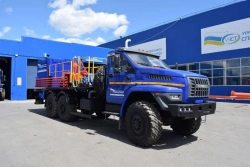
Products — Heavy Construction Machinery

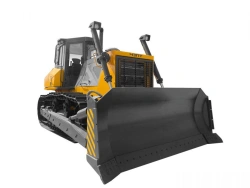
Industrial Equipment Sample 1

Type: Heavy-duty
Material: Steel
Warranty: 2 years

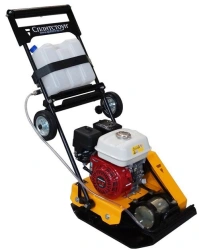
Industrial Equipment Sample 2

Type: Heavy-duty
Material: Steel
Warranty: 2 years

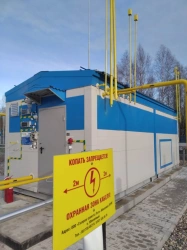
Industrial Equipment Sample 3

Type: Heavy-duty
Material: Steel
Warranty: 2 years

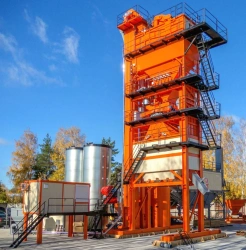
Industrial Equipment Sample 4

Type: Heavy-duty
Material: Steel
Warranty: 2 years

Industrial Equipment Sample 5

Type: Heavy-duty
Material: Steel
Warranty: 2 years

Industrial Equipment Sample 6

Type: Heavy-duty
Material: Steel
Warranty: 2 years

Industrial Equipment Sample 7

Type: Heavy-duty
Material: Steel
Warranty: 2 years

Industrial Equipment Sample 8

Type: Heavy-duty
Material: Steel
Warranty: 2 years

Bulldozers, Rollers and Pavers: Russian Heavy Machinery Without the Western Price Tag

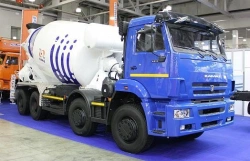
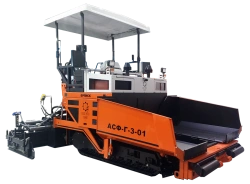
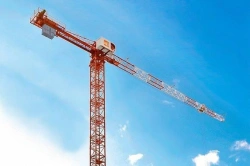
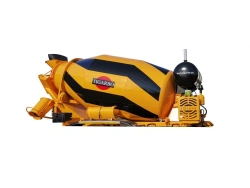
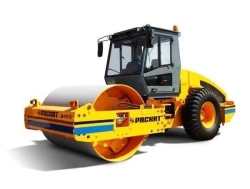
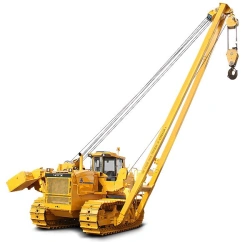
Heavy construction equipment is where Russian engineering remains genuinely competitive on the world market. This category lists 433 positions from 108 suppliers, led by 91 bulldozer listings and 54 road rollers, with asphalt pavers (12), pile driving equipment (13), pipelayer cranes (16), tower cranes (10), concrete mixer trucks (33) and plate compactors filling out the road-building chain. Two industrial niches stand out: 34 cementing units for oilfield service and 26 packaged wastewater treatment plants. A spare parts section covers blades, undercarriage components and attachments.

The value proposition is consistent across the class: machines designed for minus 40 to plus 45 degree operation, mechanically serviceable in field conditions without dealer diagnostics, tolerant of variable fuel quality, and priced 25–40 percent below comparable Western units. For contractors in Africa, Central Asia and the Middle East running mixed fleets far from dealer networks, that maintainability is often the deciding factor.

  • Trade terms: EXW plant, FOB Novorossiysk or St. Petersburg; RoRo or flat-rack shipment for oversized units.
  • Lead time: stock machines ship in 2–4 weeks; built-to-order configurations typically 60–90 days.
  • Support: operator manuals in English, commissioning supervision and recommended two-year spare kits negotiable.
  • Documents: EAC conformity, deregistration and export customs papers handled by the seller.

State your job profile — soil, tonnage, climate — in a sourcing request and factories will propose specific models.

FAQ

How do I get spare parts after the machine arrives?
Agree a recommended spares kit with the factory at purchase — typically filters, wear plates, hoses and undercarriage items sized for 1,000–2,000 motohours. Afterwards, parts ship by air or groupage freight against the machine serial number. Many buyers keep a 5–10 percent of machine value in parts stock, which covers the first two seasons.
Are these machines adapted for hot and dusty climates?
Yes, tropical versions are standard order options: upgraded cooling packages, pre-cleaners and cyclone air filters, and cabin air conditioning. Russian machines already tolerate wide temperature ranges by design, but state your ambient maximum and altitude in the request so the plant fits the correct radiator and fan configuration.
What does shipping a bulldozer or roller actually cost and how is it done?
Smaller rollers and compactors travel in open-top or flat-rack containers; bulldozers and pavers usually go RoRo from Novorossiysk or St. Petersburg, sometimes partially disassembled with the blade and cab shipped separately. Sea freight to the Gulf or East Africa typically takes 25–45 days. Suppliers prepare the machine for marine transport, including preservation and lashing points.
Is operator training or commissioning support included?
Commissioning supervision is normally a paid option: a factory engineer attends startup, verifies assembly and trains your operators over 3–7 days. For simpler machines, plants provide English-language manuals, video instructions and remote support instead. Write the support package into the contract rather than assuming it.
What payment terms do machinery plants accept?
The common pattern is an advance of 30–50 percent with the balance before shipment, paid by bank transfer. Letters of credit are accepted by larger plants, though confirming banks should be discussed early given current banking routes. For repeat buyers, partial deferral against delivery documents is sometimes negotiable.
Do cementing units and treatment plants come with engineering support?
Yes. Oilfield cementing units and packaged wastewater plants are engineered products, so suppliers provide process calculations, foundation and utility connection drawings, and supervised commissioning. For treatment plants, you submit inflow volume and contamination data first; the plant then sizes the unit and guarantees outlet parameters in the contract.