
Products — Exhaust System

Mufflers, Exhaust Pipes, Catalytic Converters and Resonators by Part Number

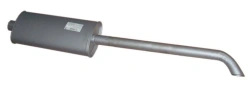
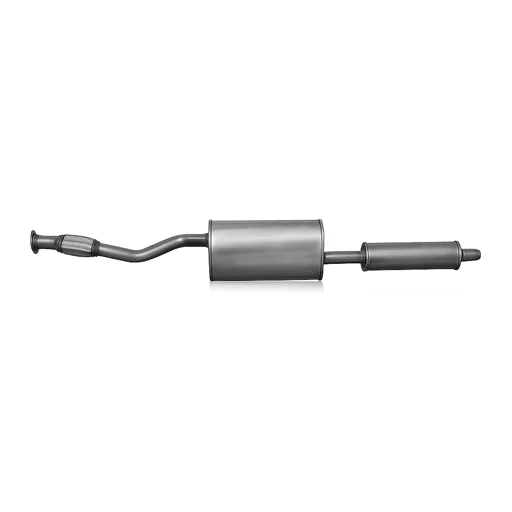
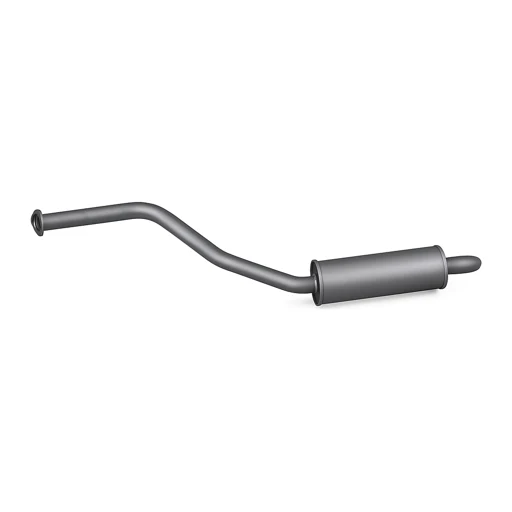
A focused section: 218 listings from 29 suppliers, organized into mufflers (126 positions — the majority), exhaust pipes (63), catalytic converters (16) and resonators (6). The depth in mufflers reflects real demand patterns: exhaust silencers are corrosion consumables, replaced several times over a vehicle's life, and fleet markets consume them by the pallet. Coverage follows the Russian LCV and passenger platforms — GAZ, UAZ, LADA — plus universal-fit pipes and silencer bodies used by exhaust workshops to fabricate custom systems.

The competitive story here is metallurgy and simplicity. Russian exhaust producers offer aluminized and stainless variants of the same silencer, letting an importer choose between price point and lifespan for a given market — a meaningful lever in coastal West Africa, where ordinary steel exhausts can fail within two years, versus dry Central Asian climates where aluminized parts last far longer. Construction is welded steel without fragile internal packing, tolerant of rough roads and amateur installation.

  • Material tiers: ordinary, aluminized and stainless versions across the popular references — same geometry, different corrosion life.
  • Workshop stock: straight pipes, bends, flex sections and universal silencer cans for custom exhaust fabrication.
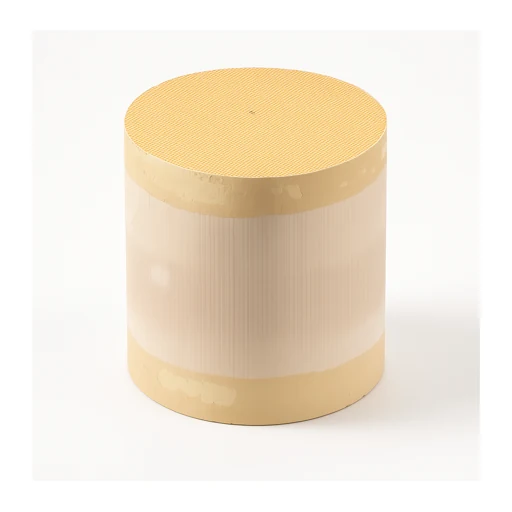
  • Catalysts: replacement converters supplied with conformity documentation for the declared emission norm.
  • Packing economics: mufflers are light but bulky — calculate by volume, not weight; nesting schemes are agreed with the packer.
  • Terms: EXW or FOB St. Petersburg / Novorossiysk; overland consolidation to Central Asia is straightforward.

Send your fastest-moving exhaust references through the marketplace and suppliers will quote per material tier with volumetric packing calculations.

FAQ

How much longer does an aluminized muffler last compared with ordinary steel?
As a hedged rule from fleet practice: aluminized silencers typically last two to three times longer than plain steel in humid or salted-road conditions, and stainless versions longer still. In dry climates the gap narrows and ordinary steel may be the rational budget choice. Most importers stock two tiers and let the customer's wallet decide.
Exhaust parts are bulky — how do I estimate shipping cost realistically?
Quote by cubic metres, not kilograms. A 40-foot container holds a large but finite number of boxed mufflers, and clever nesting of pipes inside silencer cartons improves density meaningfully. Ask the supplier for their standard export packing scheme with units-per-container figures for your specific references before comparing prices — a cheaper unit price can lose to better packing.
Do replacement catalytic converters come with emissions documentation?
Converters in this catalogue ship with conformity declarations stating the emission standard they are built to satisfy. Whether that satisfies your national inspection regime depends on local rules — some markets require homologation, others accept any functional converter. Check your regulator's position first and tell the supplier, who can advise which document package fits.
Can workshops order universal parts instead of model-specific systems?
Yes — straight tubing in common diameters, mandrel bends, flexible couplings and universal silencer bodies form a distinct product group here, aimed exactly at exhaust fabrication shops. A mixed pallet of universal components plus the ten best-selling model-specific mufflers for your market is a typical first order pattern for a new distributor.
What is the usual lead time for exhaust parts orders?
These are catalogue products in continuous production: popular references ship from stock within days, and a consolidated mixed order is normally ready for dispatch in one to three weeks. Sea transit adds the usual 30–50 days to Middle Eastern or African ports; trucking to Central Asia runs about two weeks door to door.