

产品 — 储罐与容器
常见问题
•What information does a fabricator need to quote a custom tank?
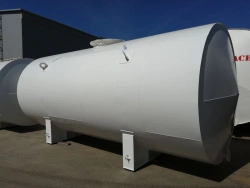
Five things: stored medium and its temperature, working volume, orientation and installation type (underground, surface, elevated), site climate, and any internal equipment such as heating coils or mixers. With that, the plant proposes material, wall thickness and a general arrangement drawing, usually within a week, and a firm price tied to current steel cost.
•How are large tanks shipped if they exceed container dimensions?
Three routes are used. Vessels under roughly 3.2 metres diameter travel whole by truck or flat-rack. Larger tanks are fabricated in shell sections, shipped compactly, then welded on site — the plant supplies assembly drawings and can send a welding supervisor. Field-erected designs bolt or weld from panels for the biggest volumes.
•Are septic tanks and treatment plants sized for local regulations?
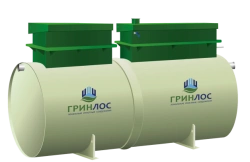
Suppliers size treatment equipment from your inflow data — population equivalent or daily volume and contamination levels — and guarantee outlet parameters in the contract. You then check those outlet figures against your national discharge norms. Plants regularly adjust process stages, adding tertiary treatment or disinfection, to meet stricter local limits.
•What corrosion protection is applied for underground installation?
Standard practice is abrasive blasting followed by reinforced bitumen-polymer or polyurethane external coating, with thickness measured and recorded. Internally, the lining matches the medium — from epoxy for fuels to food-grade coatings or bare stainless steel. Cathodic protection points can be welded in if your site plan uses them.
•How long does fabrication take from drawing approval?
Simple single-wall tanks up to 25 cubic metres typically take 3–5 weeks from approved drawings. Stainless process vessels, double-wall fuel tanks and packaged treatment plants run 6–10 weeks depending on complexity and internal equipment. Add transport: 1–2 weeks overland to Central Asia, 4–6 weeks by sea to the Gulf or Africa.